Curious to see what we do?
Here are some examples of our work - whether you are looking for impact reports or collaboratively produced short films, we can work with you to ensure your data impacts the right people, the right way.
Young Digital Lives
Peer research with young people
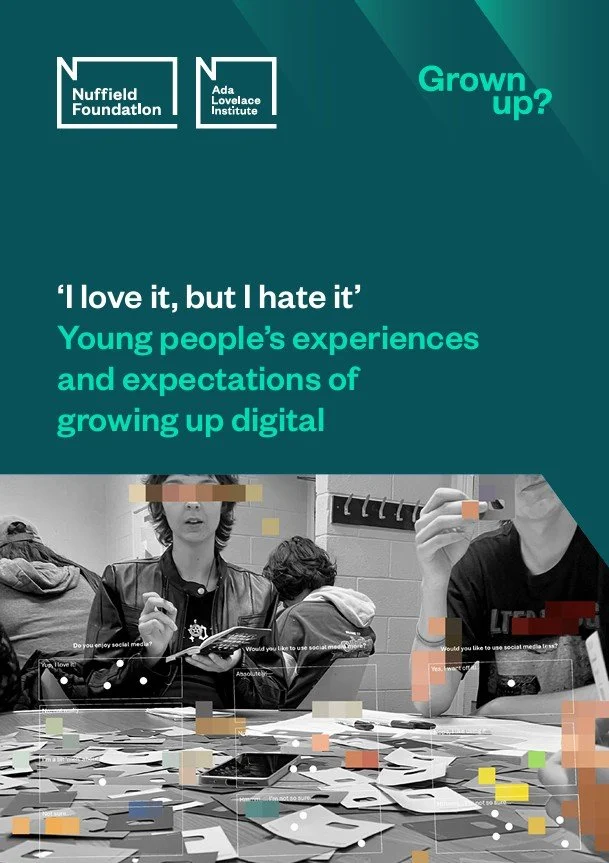
In 2025, we collaborated with Hot Chocolate Trust and the Ada Lovelace Institute to lead a national peer research study to understand young people’s digital lives.
We worked with a small group of young people from Dundee and trained them as peer researchers - over 4 months, they explored their digital experiences, working together to co-design research and travel across the UK gathering data, before coming home to co-analyse and make sense of what they found.
The full report was published in May 2026. It is a unique insight into the complexity of young people’s digital lives. It shows how tech enables them to build valuable connections and communities, helps with regulation and relaxation, while also exposing them to serious risks and harms - and that they they are currently navigating these harms alone. You can read the full report here.
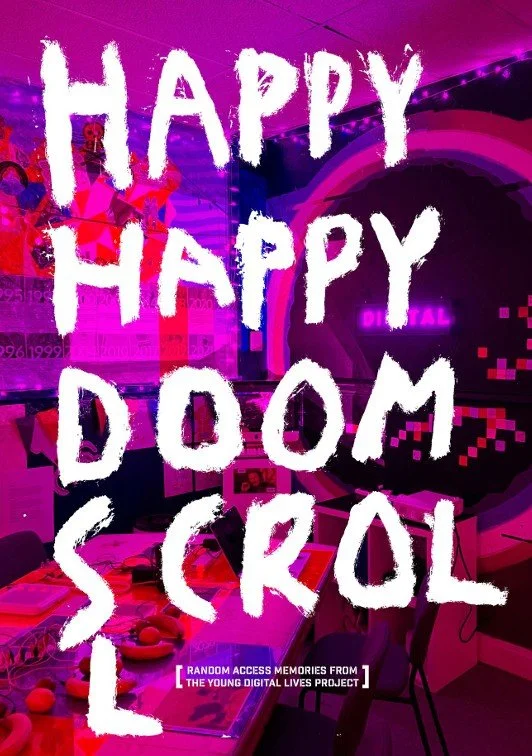
The peer researchers chose to also create a visual snapshot of the many sights, sounds, thoughts and emotions they experienced during their time as peer researchers.
This took the form of HAPPY HAPPY DOOM SCROLL: a beautiful zine full of photos, art, and words and is available to download here.
Alongside the peer research process, we collaborated with 10 young people to co-create a series of short films exploring their personal experiences of digital technologies. The films are a celebration of young people, of collaboration, and provide an invaluable insight into the complexities that young people navigate online.
All the films are available to view below - we hope you enjoy them as much as we do!
Young People’s Voices




HEAR for YOU
Learning and evaluation partner
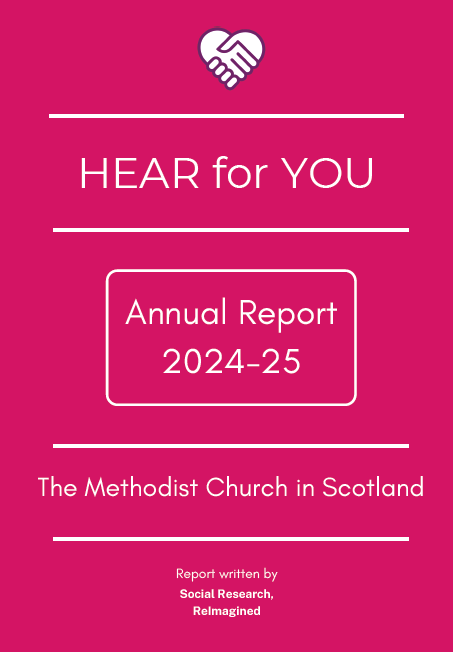
In the Autumn of 2022, the Angus, Dundee and Perthshire Methodist Circuit began to explore the possibility of developing a new service to support women at risk of sexual exploitation in Dundee, Scotland. We worked with the team through a period of scoping and review, gathering data from experts within the violence against women and girls sector across the UK. The data demonstrated a clear gap in current provision - the need for a space where women can set the agenda and explore their lived experiences, including their experiences of faith. This was the start of the HEAR for YOU listening service.
We continue to support this work as a learning partner. We meet the team every 6 weeks for collective reflection to monitor progress, identify challenges and implement change. Our first annual report was published in the summer of 2025, drawing on in-depth interviews with practitioners from across Dundee. You can read the full report here.
Evaluation for Peacebuilding
Global participatory evaluation
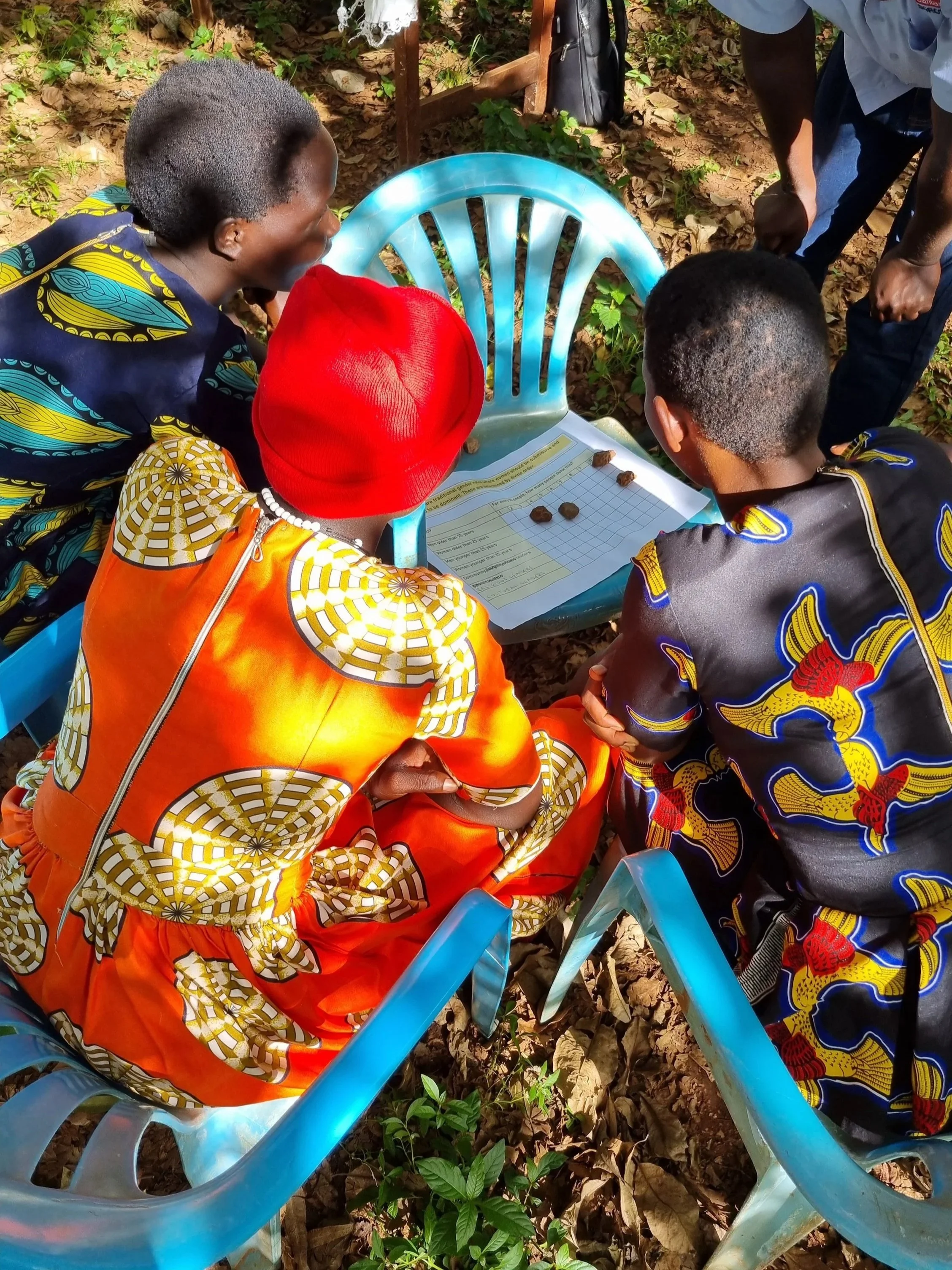
We were contracted by Mensen Met Een Missie, a Dutch peacebuilding NGO to lead participatory baseline studies in seven countries. Over the course of 18 months, the evaluation ran 70 focus groups and 70 interviews with a total participation of 650+ people. The work established a baseline from which to monitor impact and identify change for a new 10-year funding programme.
This was a complex evaluation, working with participants experiencing repeated displacement, armed conflict, systemic discrimination and extreme violence. We were able to design and deliver the work in partnership with local teams, creating spaces for people to share their lived experiences and openly discuss attitudes towards other social groups.
The evaluation resulted in a detailed documentation of the realities of structural oppression - through listening to the experiences of oppressed groups we were able to build an understanding of the wide ranging ways that people experience and understand oppression within their unique contexts.